Related

Why Recovery is Just as Important as the Workout | Longevity MVMT
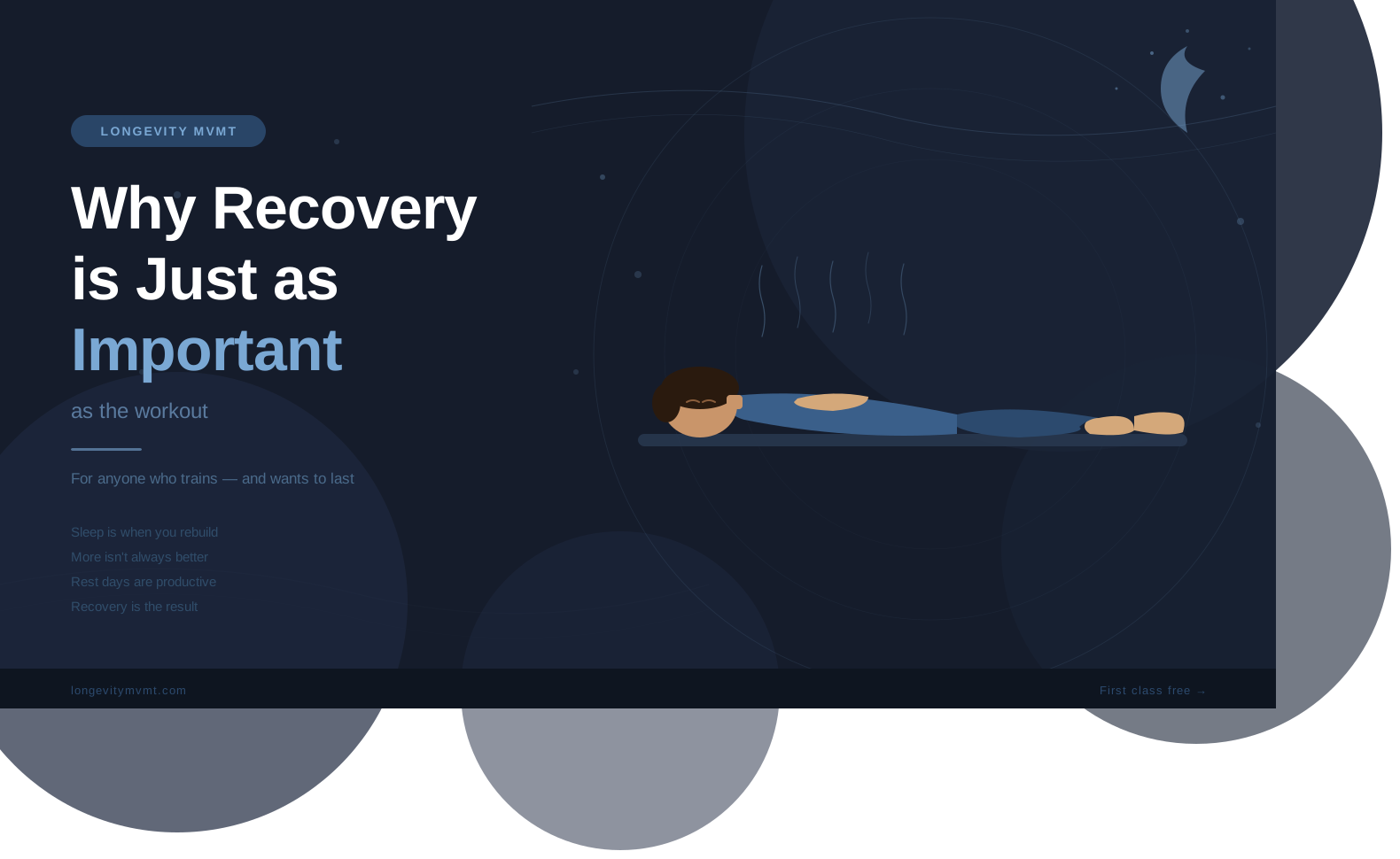
Why Recovery is Just as Important as the Workout
There's a common belief in fitness culture that more is always better. More sessions, more sweat, more intensity. Push through the soreness. Never miss a day. Rest when you're dead.
Here's the thing, that mindset is actually working against you. The workout is the stimulus. Recovery is where the results happen. Without one, the other is just damage.
What actually happens when you work out
Exercise creates stress on your body, intentional, productive stress. Your muscles develop small tears. Your nervous system gets taxed. Your energy stores deplete. None of that is bad. But the adaptation, getting stronger, fitter, more resilient, only happens during the recovery window that follows. Skip recovery, and you're just repeatedly breaking your body down without giving it a chance to rebuild.
Signs you're not recovering enough
These are easy to dismiss, but they're your body sending clear signals:
- You feel more tired after workouts than you used to
- Your performance has stalled or is getting worse
- You're getting sick more often
- Sleep feels off even when you're exhausted
- Nagging aches that never quite go away
- You dread workouts you used to enjoy
What good recovery actually looks like
Recovery isn't just lying on the couch (though that has its place). It's a mix of intentional habits that let your body do its job:
- Sleep. Non-negotiable. Most muscle repair and hormone regulation happens during deep sleep. 7-9 hours is the target, not a luxury.
- Nutrition. Your body needs protein to repair muscle and carbohydrates to replenish energy. Undereating after hard training is one of the most common recovery mistakes.
- Active rest. Light walking, stretching, or mobility work keeps blood flowing to sore muscles without adding more stress. It works.
- Heat and cold. Sauna sessions help flush out metabolic waste and improve circulation. Cold exposure can reduce inflammation. Both are tools, not magic — but effective ones.
Rest days are not wasted days
A planned rest day is doing exactly what it's supposed to do. The people who last the longest, and feel the best doing it, are the ones who treat recovery as seriously as training. It's not a break from progress. It is progress.
At Longevity MVMT, recovery is built into how we train. Our mobility and Kinstretch classes are designed to keep your body moving well between harder sessions, and our infrared sauna is available to members for exactly this reason. Training smart means training for the long game.
Come see how we do it — first class is free at longevitymvmt.com
Longevity MVMT | 7466 Edinger Ave, Huntington Beach, CA